Managed Farmlands: A Smart Way to Invest in Red Sandalwood
Feb 1, 2026
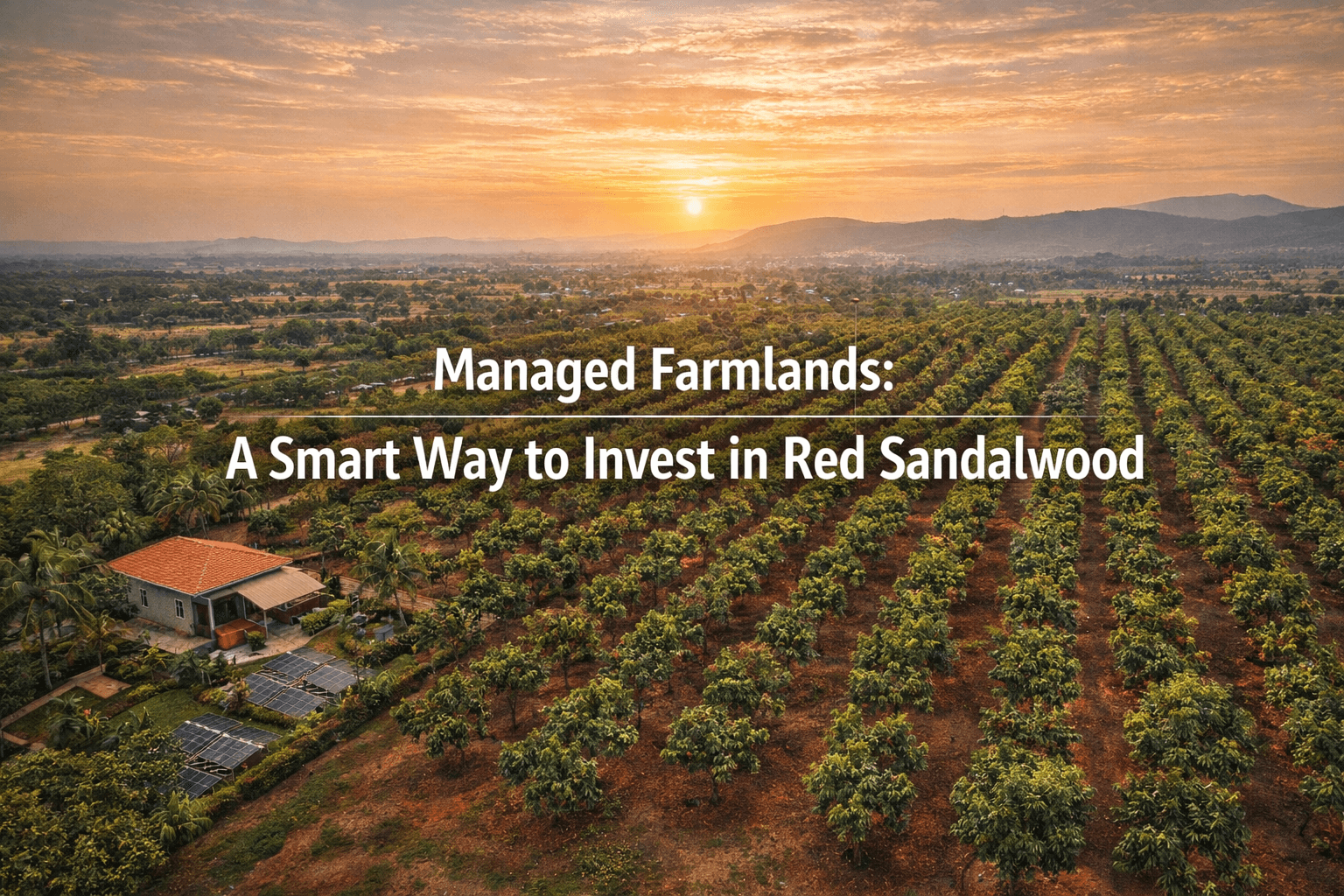
As investors look beyond traditional real estate and volatile markets, farmland investment—especially in red sandalwood plantations—is emerging as a powerful long-term wealth strategy. But owning agricultural land and managing plantations isn’t easy for everyone.
That’s where managed farmlands come in.
If you’re exploring farmland projects or farmland plots for sale that offer passive ownership with professional management, investing in red sandalwood through managed farmlands could be a smart move.
What Are Managed Farmlands?
Managed farmlands are professionally operated agricultural or plantation projects where investors own a defined land parcel, while experts handle:
Plantation planning
Tree cultivation (like red sandalwood)
Irrigation & soil management
Legal compliance
Harvest planning & security
This model allows investors to benefit from farmland appreciation and plantation returns without day-to-day involvement.
Ideal for professionals, NRIs, and long-term investors seeking passive farmland investment.
Why Red Sandalwood Is Ideal for Farmland Investment
Red sandalwood (Pterocarpus santalinus) is one of India’s most valuable and rare timber species.
Key reasons investors prefer red sandalwood:
High long-term value
Strong international demand
Limited natural supply
Grows well in controlled plantation environments
Suitable for managed farmland projects
Unlike seasonal crops, red sandalwood is a long-gestation, high-value asset, making it perfect for patient capital.
Managed Farmlands vs Buying Agricultural Land Directly
Aspect | Managed Farmlands | Direct Farmland Purchase |
|---|---|---|
Expertise | Professional management | Owner-managed |
Time involvement | Minimal | High |
Compliance | Handled by operator | Owner responsibility |
Plantation success | Higher | Depends on experience |
Ideal for | Passive investors | Active farmers |
For most urban investors, managed farmlands offer lower risk and better execution than buying farmland independently.
Benefits of Investing in Red Sandalwood Managed Farmlands
No need to manage labor, irrigation, or plantation cycles—everything is professionally handled.
Farmland plots for sale in plantation projects typically appreciate due to:
Land value growth
Maturing tree assets
Limited supply of quality farmland projects
Unlike equities or crypto, farmland investment is a real, tangible asset with long-term stability.
Reputed farmland projects ensure:
Clear land titles
Plantation compliance
Transparent ownership structure
Who Should Invest in Managed Farmlands?
This investment is best suited for:
Long-term wealth creators
NRIs seeking India-based asset diversification
Professionals wanting passive income assets
Investors looking beyond apartments & plots
If you’re already exploring farmland plots for sale but lack agricultural expertise, managed models reduce complexity.
Returns & Investment Horizon: What to Expect
Red sandalwood is not a quick-return investment.
Typical investment timeline:
Initial growth phase: 5–7 years
Value acceleration phase: 8–15 years
Harvest & exit planning: long-term
Returns come from a combination of:
Land appreciation
Plantation maturity value
This makes managed farmland investment ideal for legacy planning and future wealth creation.
How to Choose the Right Managed Farmland Project
Before investing, ensure the project offers:
Clear ownership of farmland plots
Legally compliant red sandalwood plantation
Professional farm management team
Transparent exit or harvest framework
Security & maintenance assurance
Working with trusted farmland developers significantly reduces execution risk.
Looking to invest in managed farmlands with red sandalwood plantations?
Explore verified farmland projects, understand ownership models, and get expert guidance on long-term returns.
Speak to our farmland investment advisor
Get details on farmland plots for sale & expected returns
FAQs – Managed Farmlands & Red Sandalwood Investment
It is a model where investors own farmland while professionals manage plantation, maintenance, and operations.
Yes, when done under regulated plantation guidelines and proper compliance.
Ideally 10–15 years for meaningful value creation.
Yes, many farmland projects are designed specifically for NRI investors with transparent ownership structures.
Returns are generated through long-term land appreciation and the value of mature red sandalwood plantations.
Related Articles:
Top 7 Red Chandan Benefits You Didn’t Know — From Ayurveda to Investment Value
Economic Benefits of Red Sandalwood Cultivation for Small & Large Investors
Why Spiritual & Weekend Home Destinations Are Becoming Real Estate Hotspots
Why Legal Verification of Property Is Crucial Before Buying a Plot