How to Identify Red Sandalwood Tree (Complete Field Guide)
Mar 27, 2026
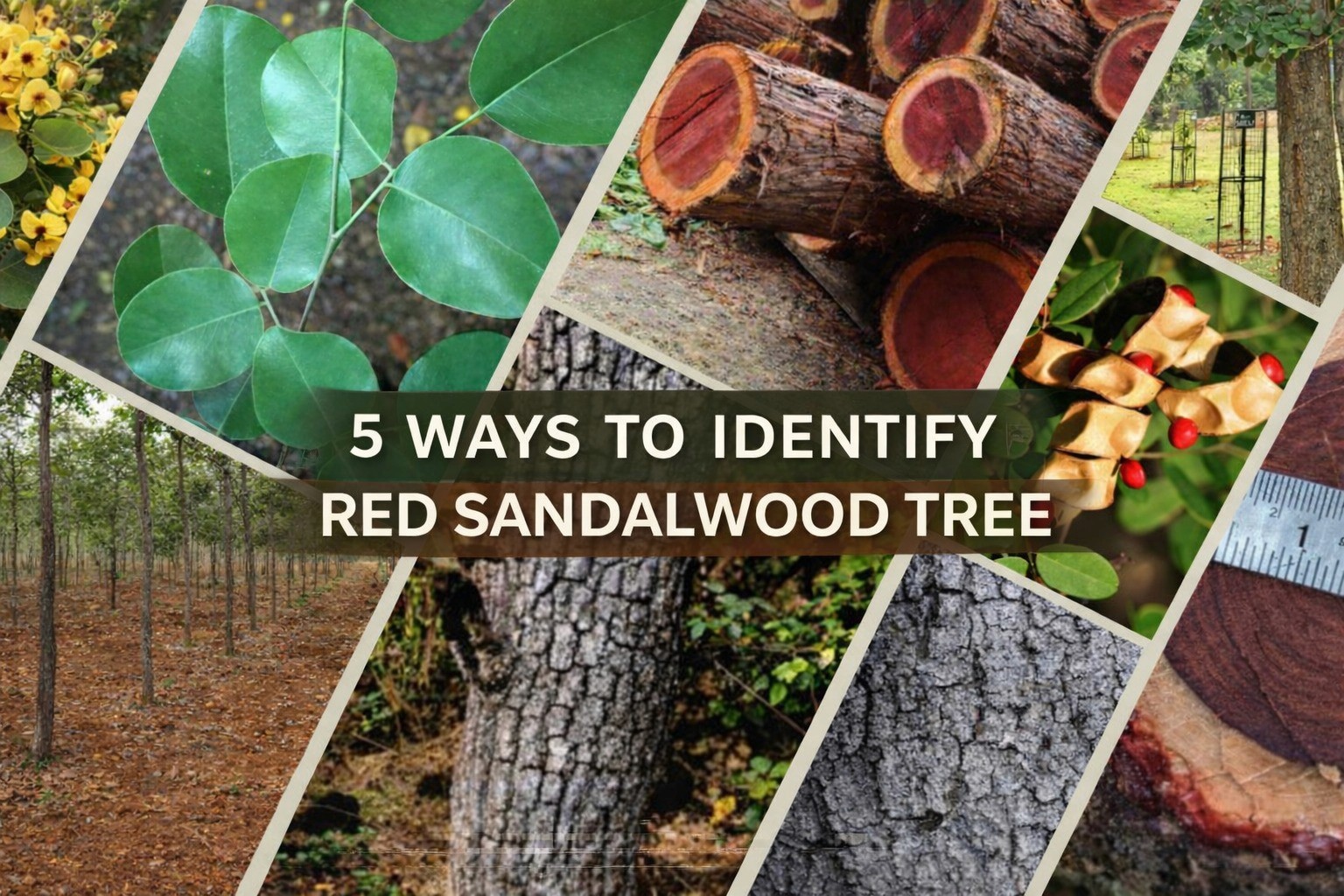
Identifying a Red Sandalwood tree (scientifically known as Pterocarpus santalinus) is crucial for farmers, investors, and nature enthusiasts—especially in regions like Andhra Pradesh where this valuable species naturally thrives.
If you’re looking to identify red sandalwood tree accurately, relying on just one feature isn’t enough. Instead, you need to observe a combination of characteristics like leaves, bark, wood color, and growth pattern.
In this guide, we’ll break down 5 easy and practical ways to identify a red sandalwood tree in real-world conditions.
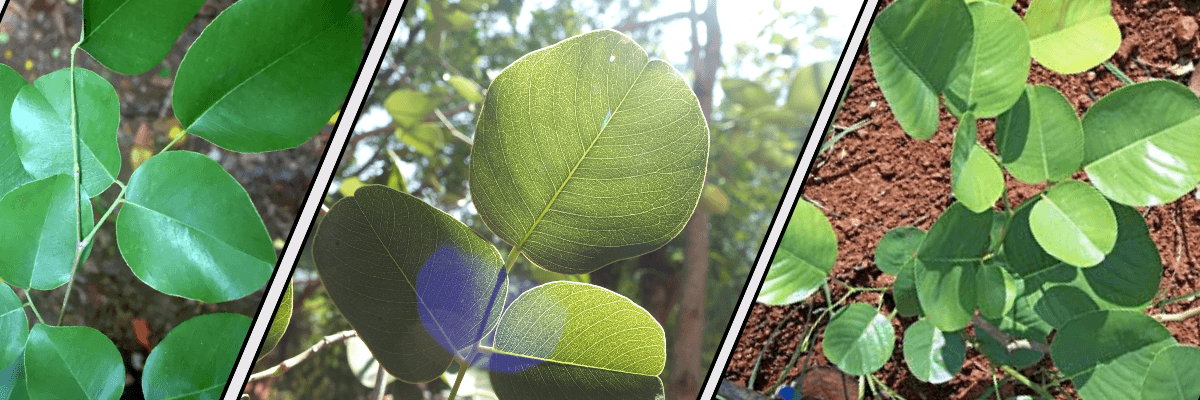
The easiest way to start is by observing the leaves.
Red sandalwood leaves are:
Compound leaves (multiple leaflets on a single stem)
Usually 3–5 leaflets per leaf
Leaflets are:
Oval or slightly round
Smooth-edged
Bright to dark green with a slight shine
Pro Tip: If the tree has single, long leaves instead of clustered leaflets, it is not red sandalwood.
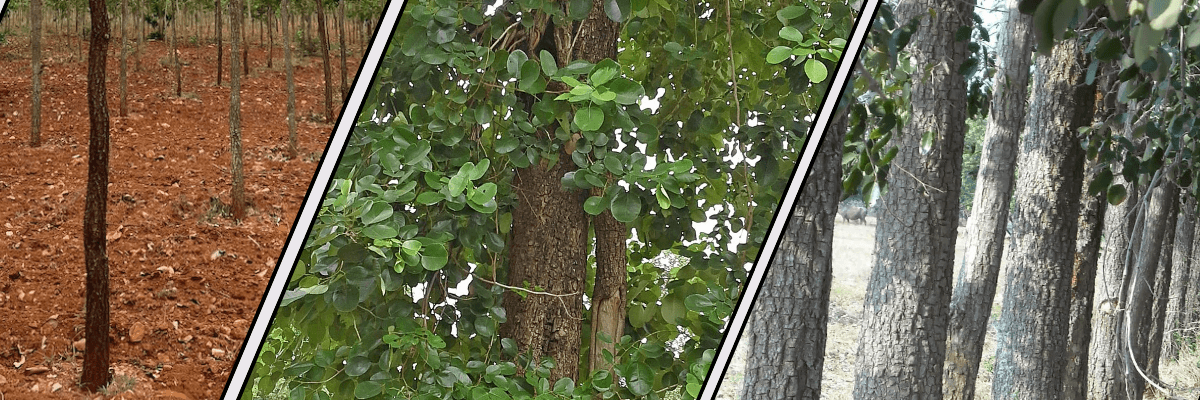
To identify red sandalwood tree, look at its overall structure.
Key characteristics:
Medium-sized tree (8–15 meters height)
Dense and rounded canopy
Branches spread evenly, forming a compact crown
It typically grows in:
Dry, rocky terrains
Low rainfall areas
This makes it common in parts of Andhra Pradesh and surrounding regions.
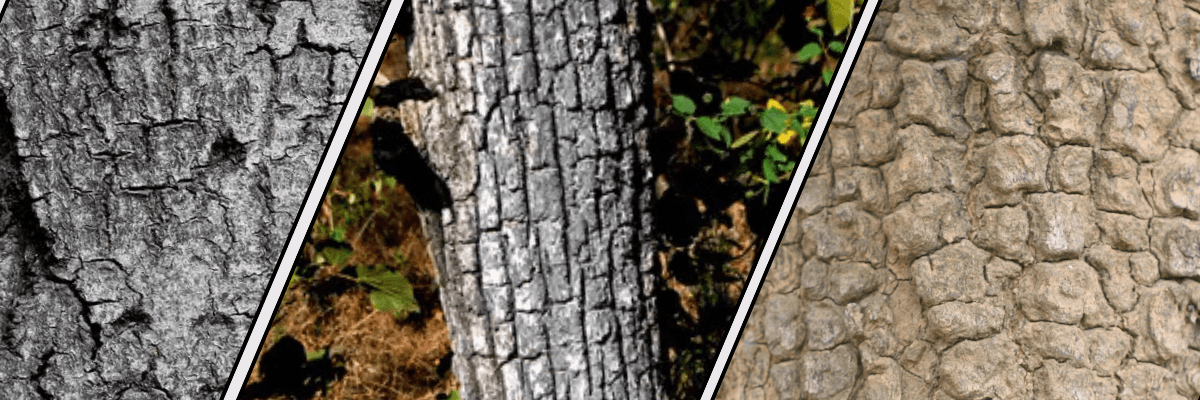
Another reliable method to identify red sandalwood tree is by studying the bark.
Look for:
Dark brown to blackish bark
Rough, uneven surface
Visible cracks or flaky texture
When slightly cut or scratched:
Inner layer may show a reddish tint
This is a strong early indicator, especially in semi-mature trees.
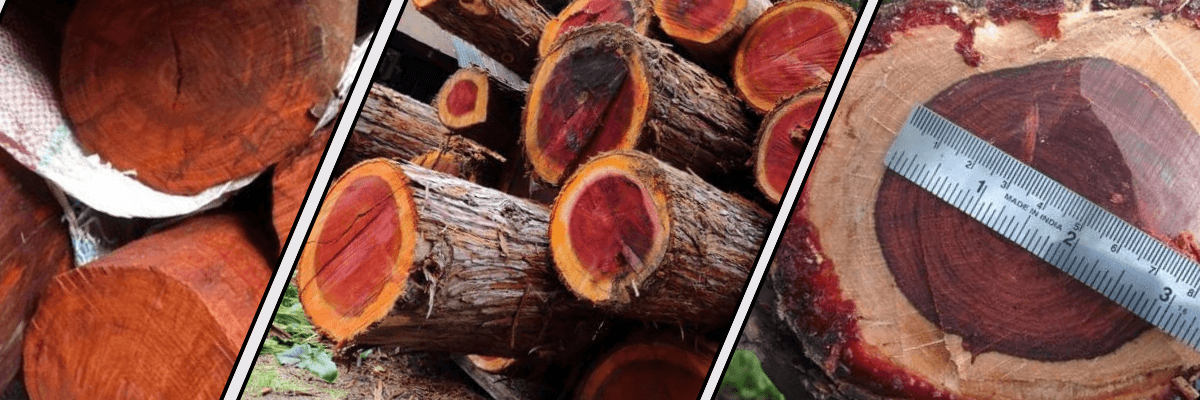
The most definitive way to identify red sandalwood trees is by its wood.
Inner wood (heartwood) is:
Deep red or maroon
Very dense and heavy
Outer layer may appear pale, but the core is always richly colored
This is why red sandalwood is highly valuable in furniture, carvings, and exports.
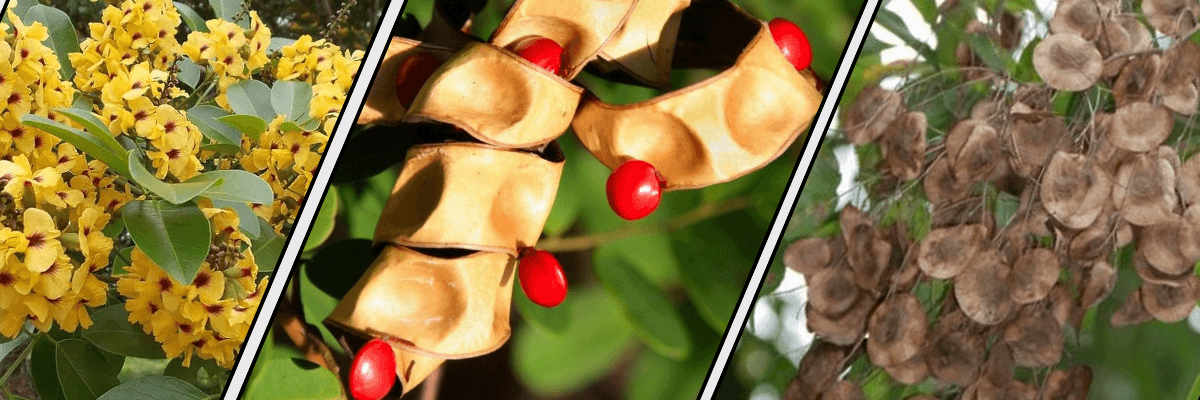
During the flowering season, you can identify red sandalwood tree using its reproductive features.
Flowers:
Small and yellow
Grow in clusters
Fruits:
Flat, round seed pods
Light brown when mature
These features are especially useful when leaves alone are not enough for identification.
Red Sandalwood vs White Sandalwood (Common Mistake)
Many people confuse red sandalwood with the Santalum album, but they are completely different.
Feature | Red Sandalwood | White Sandalwood |
Wood Color | Deep Red | Pale Yellow |
Fragrance | No strong smell | Strong aroma |
Leaves | Compound | Simple |
Usage | Timber & export | Perfume & oil |
Always remember: Color + Leaf Structure = Correct Identification
Final Checklist to Identify Red Sandalwood Tree
To confidently identify red sandalwood tree, check for:
Compound oval leaves (3–5 leaflets)
Dark, rough, cracked bark
Medium height with rounded canopy
Yellow flowers and flat pods
Deep red heartwood
If most of these match, you’re likely looking at a genuine red sandalwood tree.
Conclusion
Learning how to identify red sandalwood trees is essential whether you’re planning a plantation, investing in red sandwood farmland, or simply exploring nature. With its high market value and ecological importance, accurate identification helps you make informed decisions and avoid costly mistakes. Telangana Sandalwood Possession Rules are a good legal guideline on possession and transport of Red Sandalwood.
If you're exploring managed farmland or red sandalwood plantations, having expert guidance can make a huge difference—from plant selection to long-term returns.
Related Blog Posts
Managed Farmland near Hyderabad: A New Kind of Investment That Grows with Time
Is Red Sandalwood Farming Legal in Telangana?
5 Important Things to Check Before Buying Farm Plots near Hyderabad
Managed Farmland near Hyderabad: Why Agricultural Land Is Becoming a Powerful Long-Term Investment